Overview of the Digestive System
The human digestive system is a complex series of organs and glands that processes food to extract nutrients and energy, while eliminating waste. From a biomedical engineering perspective, it represents an intricate biomechanical and biochemical processing system with numerous engineering applications.
Biomedical Engineering Relevance
Understanding the digestive system is crucial for biomedical engineers working on:
- Drug delivery systems (oral medications, controlled release)
- Medical imaging techniques (endoscopy, MRI, CT scans)
- Biomechanical modeling of peristalsis and digestion
- Prosthetics and implants (esophageal stents, artificial sphincters)
- Biosensors for gastrointestinal monitoring
- Tissue engineering for organ replacement
Anatomy of the Digestive System
The digestive system consists of the gastrointestinal (GI) tract and accessory organs. The GI tract is approximately 9 meters long in adults.
Major Organs and Their Functions
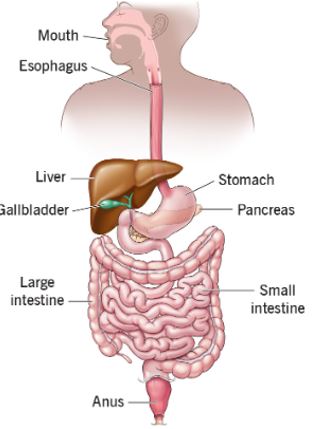
Figure: Human Digestive System
Mouth & Salivary Glands
Function: Mechanical digestion (chewing) and initial chemical digestion (amylase)
Engineering Focus: Biomaterials for dental applications, salivary diagnostics
Esophagus
Function: Transports food to stomach via peristalsis
Engineering Focus: Esophageal stents, manometry devices, reflux monitoring
Stomach
Function: Mechanical churning and chemical digestion (HCl, pepsin)
Engineering Focus: pH sensors, gastric emptying studies, bariatric devices
Small Intestine
Function: Primary site of nutrient absorption (villi increase surface area)
Engineering Focus: Drug absorption models, intestinal biosensors, capsule endoscopy
Large Intestine
Function: Water absorption and feces formation
Engineering Focus: Colonic drug delivery, microbiome analysis tools
Accessory Organs
Liver, Pancreas, Gallbladder: Produce enzymes and bile for digestion
Engineering Focus: Artificial pancreas, liver assist devices, biliary stents
Physiology of Digestion
The digestive process involves both mechanical and chemical processes that break down food into absorbable molecules.
Digestive Process Flow
Ingestion
Food intake through mouth
Propulsion
Swallowing and peristalsis
Mechanical Digestion
Chewing, churning, segmentation
Chemical Digestion
Enzymatic breakdown
Absorption
Nutrient uptake
Defecation
Elimination of waste
Key Engineering Concepts in Digestive Physiology
- Fluid Dynamics: Flow of chyme through the GI tract
- Biomechanics: Peristaltic motion and muscle contractions
- Mass Transfer: Nutrient absorption across intestinal walls
- Biochemical Kinetics: Enzyme-substrate reactions
- pH Regulation: Acid-base balance in different digestive compartments
Biomedical Engineering Applications
Diagnostic Technologies
- Endoscopy: Flexible scopes with cameras for visualizing the GI tract
- Capsule Endoscopy: Pill-sized cameras that transmit images as they pass through the digestive system
- Manometry: Pressure sensors to measure muscle contractions in the esophagus and colon
- pH Monitoring: Wireless capsules that measure acidity in different parts of the GI tract
Therapeutic Devices
- Stents: Expandable tubes to keep narrowed digestive passages open
- Artificial Sphincters: Implantable devices to control bowel movements
- Gastric Bands/Pacing: Devices for weight management and controlling gastric emptying
- Drug Delivery Systems: Targeted release formulations for specific regions of the GI tract
Research and Modeling
- In Vitro Models: Artificial digestive systems for drug testing
- Computational Models: Simulations of digestive processes and drug absorption
- Organ-on-a-Chip: Microfluidic devices that mimic digestive organ functions
Study Questions & Self-Assessment
1. Describe the role of peristalsis in the digestive system and explain how biomedical engineers might study or mimic this process.
2. How do the structural features of the small intestine (villi and microvilli) enhance its function, and what engineering principles do they illustrate?
3. What are the key considerations for designing an oral drug delivery system that targets specific regions of the digestive tract?
4. Explain how biomedical imaging techniques (like MRI or CT) can be used to diagnose digestive system disorders.
Additional Resources
Expand your knowledge with these recommended resources:
Textbooks
- Medical Physiology by Boron & Boulpaep
- Biomechanics: Mechanical Properties of Living Tissues by Fung
- Biomedical Engineering Fundamentals by Bronzino
Online Resources
- Khan Academy - Digestive System
- Visible Body - 3D Anatomy Models
- NIH National Digestive Diseases Information
Research Journals
- Annals of Biomedical Engineering
- Journal of Biomechanics
- Biomedical Microdevices
Professional Organizations
- Biomedical Engineering Society (BMES)
- American Gastroenterological Association
- IEEE Engineering in Medicine and Biology Society